Sociotechnical Research · Platform Design · New Media
Airbnb & Zoom Digital Connection Research
Four years of academic research into how people actually connect — and disconnect — through Airbnb's Online Experiences platform and Zoom calls.
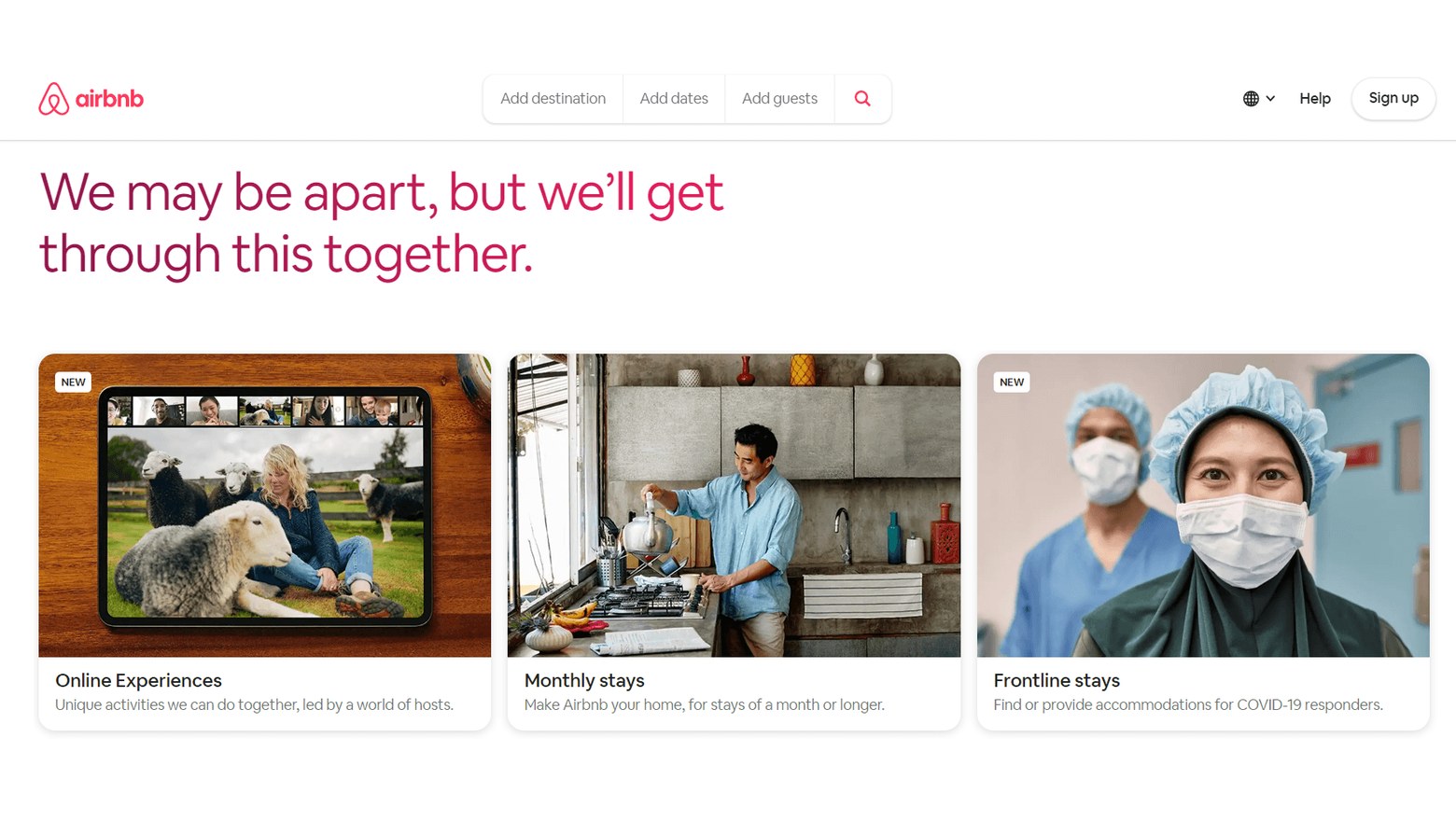
The Context
When Airbnb launched Online Experiences in the early months of the pandemic, it created something researchers rarely get: a live, global stage for watching people try to connect through a screen while cut off from almost everything else. I wanted to understand the phenomenon itself: how people related to each other, and to the technology connecting or disconnecting them, during that time.
The Ask
I set out to trace how people handled disconnection, uncertainty, and the sheer sensory absence of meeting someone only through a screen, and how digital platforms, hardware, and the invisible infrastructure behind them shape the relationships that form inside that gap.
What came out of it was knowledge that speaks directly to anyone building these platforms: how hosts and guests actually navigated the technology and each other, the social dynamics particular to that moment, and the fact that glitches, lags, and absence aren't just technical hiccups, they change whether people trust and stay engaged with a platform at all.
The Work
I started in the literature, not the field.
Before running a single interview, I worked through social theory, design research, and digital culture writing to build a framework for making sense of these new hybrid service experiences.
Then I went looking for the experience itself.
I ran in-depth interviews, did participant observation, hosted an Online Experience myself to get an immersed, native view of the platform, and analyzed over 1,030 digital artifacts across more than 500 participants around the world.
Patterns of adaptation started to surface.
I coded what I was seeing into behavioral and technological patterns: how people maintained connection, managed absence, and adapted when the infrastructure itself was unstable.
I brought it together into one story.
I consolidated the emergent themes into a single, cohesive analysis, a grounded read on connectivity, relational expectations, and how people adapt inside online experiences. This research became my doctoral dissertation and the basis for two peer-reviewed publications.
The Outcome
Here's what it added up to:
Digital Interactions Analyzed
Looking at this many interactions showed me how much glitches, lags, and tactile cues shape the experience, upending the assumption that seamless connection is even the goal.
Global Participants
Across that many participants, I kept seeing the same thing: expectations and emotional labor shifting fast as remote life changed the rules in real time.
Peer-Reviewed Publications
The framework I developed for digital (dis)connectivity has gone on to shape how other researchers think about new media and applied tech.
Publications
Being-in-touch: The (im)possibilities of communicative and tactile connection in online experiences
New Media & Society, 27(3), 1795–1810
Read the research ↗It's going to be chaos: The emergent connectivity of online experiences
HAU: Journal of Ethnographic Theory, 15(1), 115–128
Read the research ↗